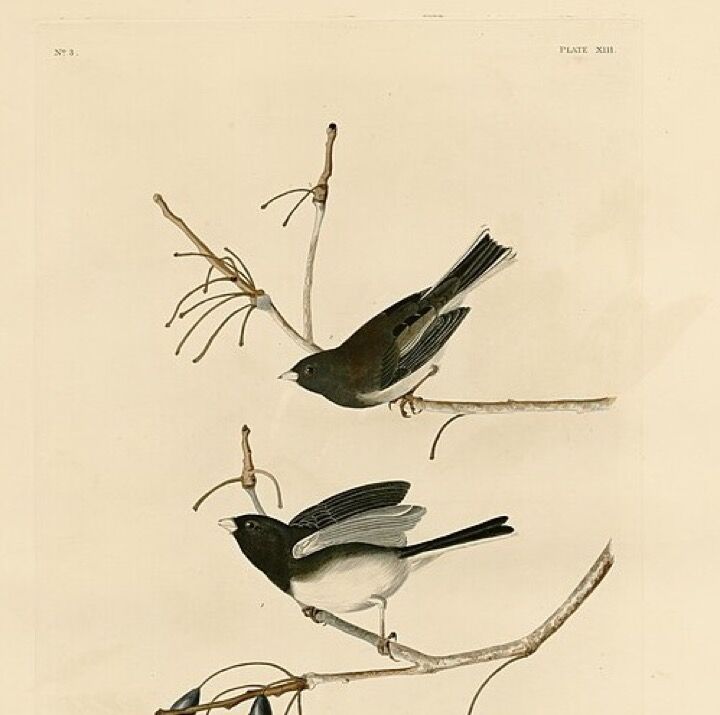
Dark-eyed Junco · Texas
When do Dark-eyed Juncos arrive in Texas for winter?
Source: eBird Observation Dataset (Cornell Lab of Ornithology) via GBIF, records 2015–2025, CC BY 4.0; summarized into typical dates, not a forecast. Data updated Nov 16, 2026; refreshed once a year when GBIF publishes a new eBird release. Methodology · Report an error
Through the year
How common Dark-eyed Juncos are among all bird sightings in Texas, day by day, 2015–2025.
What to expect
Dark-eyed Juncos usually reach Texas around November 5, the day the first 10% of fall sightings are in. In most years from 2015 to 2025 that date fell between Nov 1 and Nov 7, based on 42,817 fall records.
- Timing varies inside the state: across 23 counties with enough sightings, Brewster County is earliest (Oct 19) and Henderson County latest (Nov 22), 34 days apart.
- In 2025 they arrived on Nov 4, 1 day earlier than the ten years before.
- Allowing for how many people were out birding, the date moves 4 days later, to Nov 9: a few early birds show up first, and the main wave follows.
- Texas is one of the late states, 25th of 30. The biggest gap with a neighbor is Louisiana, 7 days later.
- 2020 was the earliest year (Oct 24) and 2015 the latest (Nov 8).
- Checked against 2025, the typical date from 2015-2024 missed the actual 2025 date by 1 day. Across 30 states the typical miss for Dark-eyed Juncos was 1 day, so Texas is about typical.
Year by year
The arrival date in each year, 2015–2025.
Show the table
| Year | Fall sightings | Arrival | Compared with typical | Half arrived | Activity-adjusted | Spring departure |
|---|---|---|---|---|---|---|
| 2015 | 2,155 | Nov 8 | 3 days late | Dec 8 | Nov 19 | Mar 30 |
| 2016 | 1,736 | Nov 6 | 1 day late, near normal | Dec 7 | Nov 9 | Apr 2 |
| 2017 | 3,184 | Nov 3 | 2 days early, near normal | Dec 2 | Oct 31 | Mar 31 |
| 2018 | 3,422 | Nov 7 | 2 days late, near normal | Dec 7 | Nov 13 | Apr 16 |
| 2019 | 3,048 | Nov 5 | On the typical date | Dec 4 | Nov 11 | Apr 2 |
| 2020 | 7,268 | Oct 24 | 12 days early, unusually | Nov 29 | Oct 25 | Mar 29 |
| 2021 | 3,711 | Nov 7 | 1 day late, near normal | Dec 6 | Nov 1 | Apr 18 |
| 2022 | 5,203 | Nov 6 | 1 day late, near normal | Dec 4 | Nov 12 | Mar 27 |
| 2023 | 4,128 | Nov 1 | 4 days early | Dec 3 | Nov 8 | Mar 30 |
| 2024 | 4,645 | Nov 3 | 3 days early | Dec 1 | Nov 10 | Apr 21 |
| 2025 | 4,317 | Nov 4 | 1 day early, near normal | Dec 5 | Oct 30 | Apr 2 |
When they leave in spring
Most have gone by April 2 in a typical year: 90% of spring sightings are in by then, and only stragglers are seen after. It ranged from Mar 29 to Apr 18 in most years, and 2024 ran latest (Apr 21). Allowing for birdwatcher activity, sightings drop below half their spring peak after about Mar 24. Our 2015-2024 date (Apr 1) missed the 2025 departure by 2 days.
By county
23 Texas counties have enough sightings for their own date. Earliest: Brewster County (Oct 19), El Paso County (Oct 20), Culberson County (Oct 21). Latest: Henderson County (Nov 22), Brazos County (Nov 21), Harris County (Nov 20).
Show all 23 counties
| County | Arrival | Compared with state | Sightings | 2025 check |
|---|---|---|---|---|
| Brewster County | Oct 19 | 17 days earlier | 929 | ±10 days |
| El Paso County | Oct 20 | 16 days earlier | 1,144 | ±9 days |
| Culberson County | Oct 21 | 15 days earlier | 1,095 | ±9 days |
| Lubbock County | Oct 28 | 8 days earlier | 1,355 | ±3 days |
| Jeff Davis County | Oct 28 | 8 days earlier | 1,612 | ±7 days |
| Randall County | Oct 31 | 5 days earlier | 735 | ±4 days |
| Midland County | Nov 5 | Same | 387 | n/a |
| Dallas County | Nov 11 | 6 days later | 3,311 | ±0 days |
| Palo Pinto County | Nov 11 | 6 days later | 311 | n/a |
| Denton County | Nov 11 | 6 days later | 2,272 | ±2 days |
| Collin County | Nov 11 | 6 days later | 3,246 | ±2 days |
| Johnson County | Nov 12 | 7 days later | 784 | ±0 days |
| Grayson County | Nov 12 | 7 days later | 1,199 | ±1 day |
| Tarrant County | Nov 13 | 8 days later | 3,255 | ±3 days |
| McLennan County | Nov 13 | 8 days later | 330 | n/a |
| Travis County | Nov 14 | 9 days later | 904 | ±4 days |
| Williamson County | Nov 14 | 9 days later | 765 | ±4 days |
| Smith County | Nov 14 | 9 days later | 763 | ±1 day |
| Ellis County | Nov 17 | 12 days later | 435 | n/a |
| Bowie County | Nov 19 | 14 days later | 447 | n/a |
| Harris County | Nov 20 | 15 days later | 489 | ±5 days |
| Brazos County | Nov 21 | 16 days later | 498 | n/a |
| Henderson County | Nov 22 | 17 days later | 446 | ±7 days |
Nearby states
| State | Typical arrival | Difference | Spring departure |
|---|---|---|---|
| Arkansas | Nov 2 | 3 days earlier | Apr 2 |
| Louisiana | Nov 12 | 7 days later | Mar 26 |
| New Mexico | Passage visitor | n/a | n/a |
| Oklahoma | Oct 31 | 5 days earlier | Apr 2 |
Farther away, the closest timing: Mississippi (Nov 8, 3 days later), Alabama (Nov 9, 4 days later), Georgia (Nov 9, 4 days later), Tennessee (Nov 1, 4 days earlier).
More birds in Texas
- Northern Cardinals all year
- Northern Mockingbirds all year
- Mourning Doves all year
- White-winged Doves all year
- Turkey Vultures all year
- Great-tailed Grackles all year
- Carolina Wrens all year
- Blue Jays all year
- Carolina Chickadees all year
- Great Egrets all year
- House Sparrows all year
- Black Vultures all year
- Red-winged Blackbirds all year
- Great Blue Herons all year
- American Crows all year
- European Starlings all year
- House Finches all year
- Eastern Phoebes all year
- Yellow-rumped Warblers Oct 31
- Red-bellied Woodpeckers all year
- Barn Swallows Mar 21
- Killdeers all year
- Ruby-crowned Kinglets Oct 19
- Black-crested Titmice all year
- All 459 birds in Texas
Get ready
Product searches on Amazon. We are not paid for these links.
Email me before they arrive
Enter your ZIP code and we'll email you about 10 days before Dark-eyed Juncos usually reach your county in Texas. Never more than one email a day.
Share it on your site
Bird clubs, nature centers and garden shops can add a free badge with the Texas arrival window. It links back here and carries the data credit.
Get the badge